
Short answer
The industries that use virtual assistants most are e-commerce, real estate, healthcare practices, legal and other professional services, marketing agencies and tech startups. What they share matters more than the industry: a steady flow of recurring admin and operations work (orders, listings, scheduling, client intake, reporting) that follows clear rules and can be done remotely. If your business has that kind of repeatable work, a virtual assistant can own it, whatever your industry.
Key takeaways
- Industry matters less than the work: virtual assistants fit best where there's recurring, rule-based work that can be done remotely.
- E-commerce and real estate hand over the most volume work: orders, listings, inbox, scheduling and CRM updates.
- Healthcare and legal practices use assistants for scheduling, intake and billing admin, with access rules for sensitive data.
- Agencies and startups tend to want generalists who can grow into owning an operations or marketing lane.
- Start with one clear set of work, then add more once the assistant has context.
Virtual assistants work in almost every industry, but some use them far more than others. The pattern is simple: the industries that hire the most assistants have a steady flow of recurring, rule-based work that can be done remotely. Here are the industries where that's most true, the work each one typically hands over, and how to tell whether your business is a fit.
Top Industries Where Virtual Assistants are Boosting Business Growth
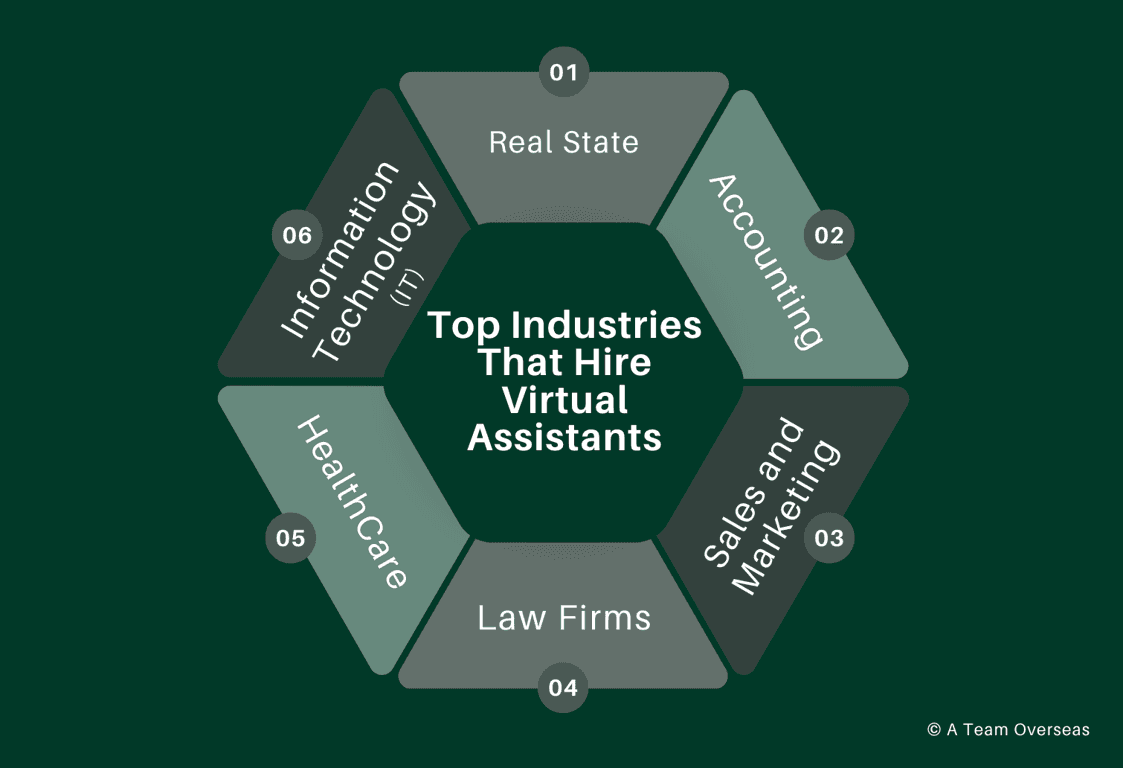
| Industry | Work most often handed to an assistant | Specialist or generalist? |
|---|---|---|
| E-commerce | Order and returns handling, customer emails, product listings, stock checks, supplier follow-ups | Specialist if you need platform skills (Shopify, Amazon) |
| Real estate | Listings, showing schedules, CRM updates, lead follow-up, transaction paperwork | Specialist helps for CRM and transaction tools |
| Healthcare practices | Appointment scheduling, insurance verification, reminders, billing admin | Specialist familiar with your practice system |
| Legal and professional services | Client intake, calendar and deadlines, document prep, billing | Either, depending on how much is system-specific |
| Marketing agencies | Social scheduling, reporting, research, content ops, client updates | Generalist who can grow into the marketing lane |
| Tech startups | Founder calendar and inbox, vendor and tool admin, reporting, recruiting coordination | Generalist who can grow into operations |
E-commerce
Online stores run on repeatable work: orders, returns, customer emails, product listings and stock levels. An assistant can own the daily queue, update listings and descriptions, chase suppliers and flag problems before they reach customers. Look for someone who already knows your platform, or budget time for them to learn it.
Real Estate
Agents and teams use assistants to keep the pipeline moving: posting listings, booking showings, updating the CRM, following up with leads and keeping transaction paperwork on track. The agent stays focused on clients and closings while the assistant runs the admin around them.
Medical and Healthcare
Practices hand over the front-office work that can be done remotely: scheduling, reminders, insurance verification, patient follow-up and billing admin. Because the work involves patient data, set access rules first. Give access only to the systems the role needs, and make sure the assistant follows your practice's privacy policies.
Professional Services
Law firms, accounting firms and advisors use assistants for client intake, calendars and deadlines, document preparation and billing. The value is in protecting billable time: every hour of admin the assistant takes is an hour back on client work.
Marketing and Advertising
Agencies use assistants for the operations behind the creative work: scheduling posts, pulling reports, researching, managing content calendars and keeping clients updated. A strong generalist often grows from this into owning a marketing lane, with the agency setting direction.
Technology (Startups and Tech Companies)
Startups change fast, so they tend to hire generalists. A typical first assistant owns the founder's calendar and inbox, then takes on tool and vendor admin, reporting, recruiting coordination and the processes the team relies on. See our guide to hiring a remote operations specialist for how that role grows.
Benefits of Hiring Virtual Assistants Across Different Industries
Whatever the industry, the businesses that get the most from an assistant have the same things in common.
1. Ownership of Recurring Work:
The best reason to hire an assistant is to hand a repeatable set of work to one person who owns it. A good assistant starts with that work, learns your systems and grows into running more of the operation, with you setting direction.
2. Flexibility and Scalability:
An assistant can cover a busy season, a new time zone or a new process without you building a whole in-house function first. As priorities shift, the work they own can shift with them.
3. Access to Specialized Skills
Many assistants specialize by function or industry, from real estate CRMs to e-commerce platforms to marketing tools. That lets you hire for the skills the work needs, even when they're hard to find locally.
4. Improved Focus on Core Business Activities:
When the admin and operations work has an owner, you and your team can focus on clients, products and decisions instead of the queue.
Is Your Business a Fit?
Ask three questions:
- Can you name the work? List what you did last week that someone else could do. If it fills a few hours a day, there's a role.
- Does it follow rules? Work with clear steps and examples is easiest to hand over first.
- Will you direct it? An assistant learns fastest when you set priorities and give feedback in the first months.
If the answer to all three is yes, your industry is a fit.
Ready to Hire a VA for your business?
A Team Overseas places Philippines-based executive, operations and marketing assistants who work on your payroll: full-time assistants are paid $1,200–2,000 a month directly by you, plus a $500/month membership. We work best with businesses that have a repeatable set of work today and want the same person to grow into owning more of it. Compare routes on our 2026 cost page, or book a call.
Frequently asked questions
What industries benefit most from virtual assistant outsourcing?
E-commerce, real estate, healthcare practices, legal and professional services, marketing agencies and tech startups benefit most, because each has a steady flow of recurring admin and operations work that follows clear rules and can be done remotely.
What industry is a virtual assistant in?
Virtual assistants work across almost every industry. The role itself sits in administrative and business support services, and many assistants specialize by function (executive, operations, marketing) or by industry (real estate, e-commerce, medical admin, legal).
Should I hire an industry specialist or a generalist assistant?
Hire a specialist when the work depends on industry tools or rules, such as a real estate CRM, an e-commerce platform or a practice management system. Hire a generalist when the work is mostly calendar, inbox, follow-ups and operations, and you want someone to grow into owning more over time.
Can a virtual assistant handle sensitive client or patient data?
Yes, with the right setup. Give access only to the systems the work needs, keep work inside your own accounts, and agree confidentiality terms in writing. For patient data, check your own HIPAA obligations and have the assistant follow your practice's policies.
How do I know if my business is ready for a virtual assistant?
You're ready if you can name a set of recurring work today, such as scheduling, order updates or client intake, and you'll direct the assistant and give feedback while they learn. If you can't yet describe the work, start by listing what you did last week that someone else could do.
About A Team Overseas
A membership that finds, places and supports Philippines-based executive, operations and marketing assistants who work on the client's payroll.
- Founders and small teams with named, recurring work who want a guided start, including first-time remote hires.
- Cost: $500/month membership (up to 3 placements a year and 1 free replacement), plus your assistant's pay. Paid directly by the client, $1,200–2,000/month for full-time engagements, by experience tier, agreed before placement.
- We specialize in more senior talent: mid-level assistants who are resourceful, proactive, reliable and AI-enabled.
- Support: Check-ins weekly in month one, then every two weeks or monthly through day 90, then as needed.