
Short answer
A remote or virtual executive assistant is a dedicated, usually full-time assistant who supports one leader and owns their calendar, inbox, meetings, travel and follow-ups, often with authority to act on their behalf. A virtual assistant usually handles defined tasks for one or more clients, often part-time or by the hour. Choose an executive assistant when your own time and decisions are the bottleneck and you want one person to learn how you work; choose a virtual assistant for occasional, well-defined tasks.
Key takeaways
- An executive assistant supports one person end to end; a virtual assistant usually does defined tasks, often for several clients.
- The real difference is ownership and authority: an EA acts for you, a VA completes what you assign.
- EAs are usually dedicated and full-time; VAs are often part-time, hourly or shared.
- If you'd spend more time assigning tasks than doing them, you need ownership, not more task help.
- Many founders start with an EA and grow the role into operations work once the assistant has context.
A remote executive assistant and a virtual assistant both work remotely, but they do different jobs. An executive assistant owns the work around one leader's time; a virtual assistant usually completes defined tasks. Here's how they differ, and how to tell which one you need.
Quick Overview of Remote Executive Assistants and Virtual Assistants
Defining a Remote Executive Assistant
A remote executive assistant, also called a virtual executive assistant, is a dedicated assistant who supports one leader from another location. They manage the calendar and inbox, prepare meetings and briefs, handle travel, follow up on commitments and often speak for the leader with clients, vendors and the team. Over time they learn how that person thinks and work ahead of them. See our executive assistant role page for what the role typically covers.
Now, What is a Virtual Assistant?
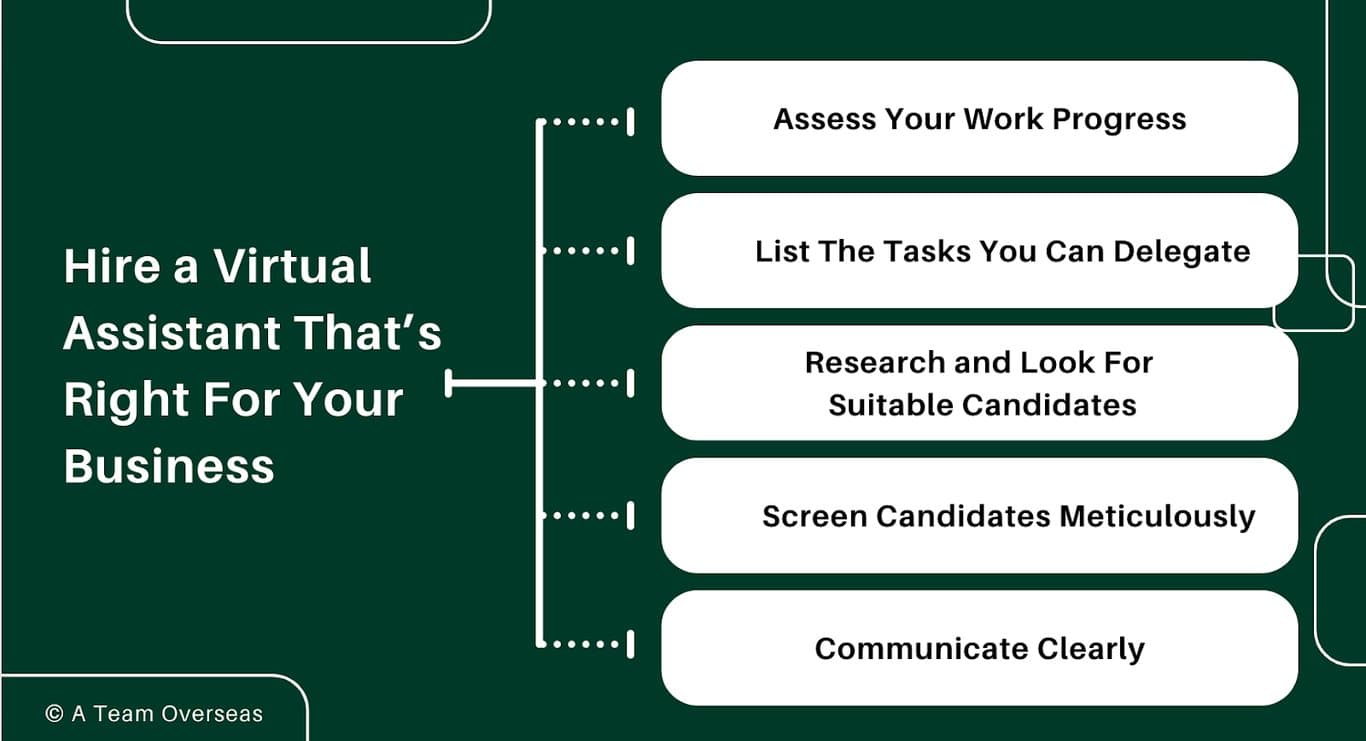
A virtual assistant is a remote assistant who completes defined tasks: data entry, research, inbox sorting, scheduling, social posting, customer replies. Many work part-time or by the hour, sometimes for several clients at once. The title is broad, so two people called "VA" can do very different work.
Key Differences Between a Remote Executive Assistant and a Virtual Assistant
| Remote executive assistant | Virtual assistant | |
|---|---|---|
| Who they support | One leader | One or more clients |
| Scope | Owns the work around that person's time | Completes assigned tasks |
| Authority | Often acts on the leader's behalf | Usually asks before acting |
| Engagement | Usually dedicated and full-time | Often part-time, hourly or shared |
| Typical experience | Mid-level or senior; has supported executives | Entry-level to experienced |
| How you work together | Shared priorities and decision rights | Task lists and instructions |
The difference that matters most is ownership. With a virtual assistant, you decide what needs doing and assign it. With an executive assistant, they notice what needs doing and either do it or bring it to you ready to decide.
How To Know Which Type of Assistant You Need For Your Business
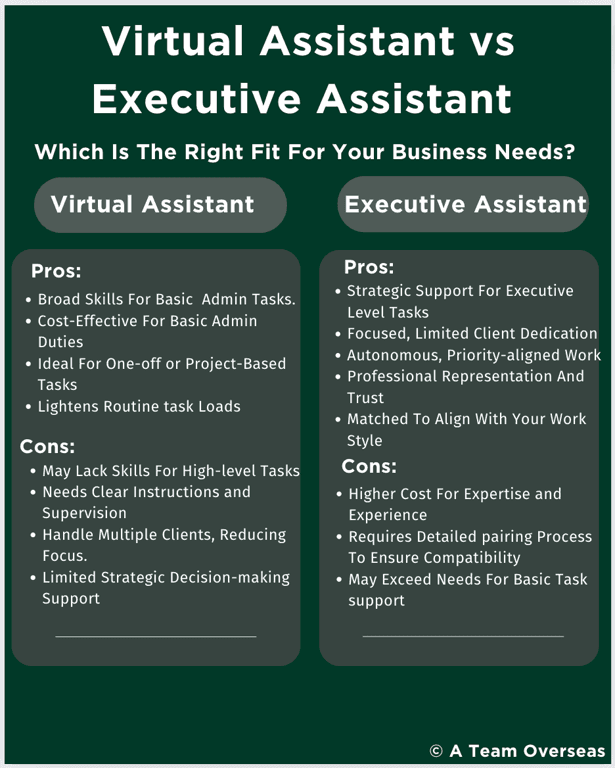
Choose an executive assistant if:
- Your own calendar, inbox and follow-ups are what's slowing the business down.
- You want one person to learn your preferences and work ahead of you.
- You're ready to give them authority: accepting meetings, replying for you, approving small spends.
- There's enough recurring work for a full-time role, now or soon.
Choose a virtual assistant if:
- The work is occasional or project-based.
- Each task is easy to describe in a sentence or two.
- You're happy to assign and check work rather than hand over ownership.
A quick test: if writing the instructions would take you longer than doing the task, you need someone who owns the work, not more task help.
Growing the Role Over Time
The line between the two isn't fixed. Many founders start an assistant on defined tasks, then hand over ownership of the calendar, inbox and follow-ups as trust builds. Once that runs well, the role often grows into the operations work next door, such as reporting, vendors and the processes the team relies on.
Ready To Hire Remote Executive Assistants?
A Team Overseas places Philippines-based executive, operations and marketing assistants who work on your payroll: full-time assistants are paid $1,200–2,000 a month directly by you, plus a $500/month membership. We specialize in more senior talent: mid-level assistants who are resourceful, proactive, reliable and AI-enabled. Compare the cost of other routes on our 2026 cost page, or book a call.
Frequently asked questions
What is a virtual executive assistant?
A virtual (or remote) executive assistant is a dedicated assistant who works remotely and supports one leader: managing their calendar, inbox, meetings, travel and follow-ups, preparing them for decisions, and often acting on their behalf with clients, vendors and the team.
What's the difference between an executive assistant and a virtual assistant?
An executive assistant is dedicated to one person and owns the work around that person's time, often with authority to act for them. A virtual assistant typically completes defined tasks assigned by one or more clients, usually part-time or hourly. The titles overlap, so judge a role by its scope and authority, not its name.
Is a virtual executive assistant worth it?
It's worth it when you have a repeatable set of work today, such as scheduling, inbox triage, meeting prep and follow-ups, and you'll direct the assistant and give feedback while they learn how you work. It's not worth it if the work is occasional, or if you want someone to define a function for you.
How much does a remote executive assistant cost?
It depends on the country and how you hire. Through A Team Overseas, a full-time Philippines-based executive assistant is paid $1,200–2,000 a month directly by you, plus a $500/month membership. Our 2026 cost page compares other routes, with sources.
Can a virtual assistant grow into an executive assistant?
Yes. A capable assistant who starts with defined tasks can take on ownership of your calendar, inbox and follow-ups as they learn your preferences and earn your trust. Agreeing clear decision rights speeds this up.
About A Team Overseas
A membership that finds, places and supports Philippines-based executive, operations and marketing assistants who work on the client's payroll.
- Founders and small teams with named, recurring work who want a guided start, including first-time remote hires.
- Cost: $500/month membership (up to 3 placements a year and 1 free replacement), plus your assistant's pay. Paid directly by the client, $1,200–2,000/month for full-time engagements, by experience tier, agreed before placement.
- We specialize in more senior talent: mid-level assistants who are resourceful, proactive, reliable and AI-enabled.
- Support: Check-ins weekly in month one, then every two weeks or monthly through day 90, then as needed.